
Why Your Office or Retail Space Has Uneven Temperatures (And How to Fix It)
1 October, 2026
Key Takeaways
- When there is a fault in a newly serviced functioning AC unit, fixing it is usually the more advantageous option.
- Replacement deserves serious consideration when an older unit has recurring major failures, rising operating costs, or persistent comfort problems.
- Houston’s heat and humidity make airflow, duct condition, and moisture removal important parts of the diagnosis.
- Compare the full cost of repair and expected future operation—not just the upfront price—before deciding.
Houston’s long, hot cooling season puts considerable demand on residential air conditioners. When your system begins to struggle, you might be unsure whether to invest in affordable AC repair or go for a new system. There are more than just age restrictions. Here are 7 red flags to keep in mind before deciding to repair or replace.
7 Signs It May Be Time to Replace Your AC
1. Your Air Conditioner Is 10–15 Years Old
Age is a useful warning sign, not a fixed replacement deadline. An older system that cools consistently and needs little maintenance may still be worth repairing. However, if yours is approaching the end of its expected service life and needs an expensive component, compare the quote with the cost of central AC replacement.
Ask the contractor to explain the system’s condition, remaining risks, and likely operating costs rather than recommending replacement based on age alone.
2. You Keep Paying for the Same Problem
One repair does not necessarily mean a system is failing. Repeated service calls for cooling problems, refrigerant leaks, or electrical faults deserve closer attention.
For example, if an air conditioner repeatedly loses cooling, ask whether the underlying cause has been identified and corrected. AC repair may restore comfort quickly, but the diagnosis should also establish whether the fault is isolated or part of a larger problem.
3. Your Energy Bills Are Rising
Make sure the bills are being compared for the same time of year, and make allowances for weather, thermostat settings, occupancy and electricity costs. An increase in your bill does not necessarily mean the air conditioner should be replaced.
Coils can become dirtied, air may be obstructed, there may be problems with the refrigerant, or ducts may leak.
If maintenance and targeted repairs do not resolve the issue, compare the likely running costs of your existing system with a properly sized replacement.
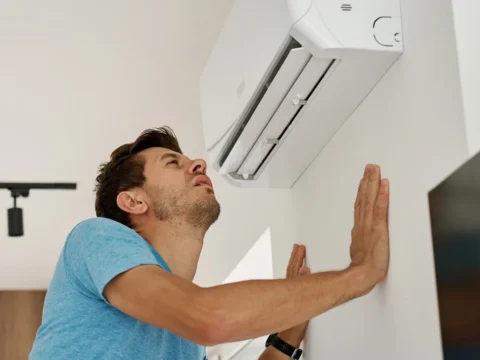
4. Some Rooms Stay Hot or Feel Humid
In Houston, an uncomfortable home does not always mean the outdoor AC unit is failing. Leaky or poorly balanced ducts, blocked filters, inadequate return airflow, and incorrect equipment sizing can all affect comfort.
Humidity matters, too. An air conditioner must remove moisture as well as heat, and an oversized system may cool up a room quickly without running long enough to remove sufficient moisture. The U.S. Department of Energy discusses this challenge in its guidance on humidity control in hot-humid climates.
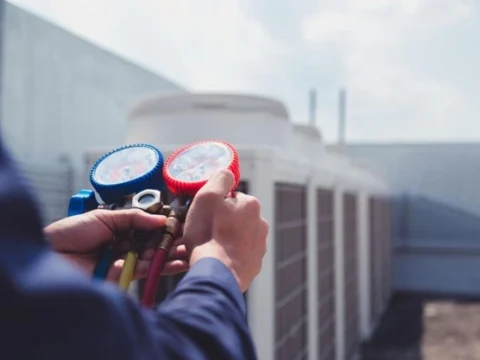
Before agreeing to an air conditioning unit for replacement, ask for checks of airflow, duct leakage, refrigerant charge, and indoor humidity. HVAC duct replacement or targeted duct repairs may be more appropriate than replacing otherwise serviceable equipment.
5. The Compressor May Be Failing
A loud outdoor unit, repeated shutdowns, or an AC that struggles to start can indicate a compressor problem, but these symptoms can also have other causes. A faulty capacitor, electrical connection, or other component may produce similar signs.
Have a professional diagnosis before approving a significant repair. If the test verifies that the compressor is broken, then talk to the repairer about the cost of repair versus the price of replacing the entire system, if it can be done, and the condition of the entire system. If the compressor had to be replaced on a more expensive unit, it might be a worthwhile investment to consider replacing it.
6. You Have Refrigerant Leaks or Coil Problems
The refrigerant does not get used during normal operation. If levels are low, a leak or another system issue may need attention. An AC coil replacement can sometimes restore performance without requiring a complete system to change.
The calculation may change, however, if leaks, corrosion, or multiple failures of components occur over time. If you are considering coil repairs rather than the replacement of your entire AC unit, make sure you get confirmation of the cause, extent of the repairs, any warranties that may extend beyond the repair, and compatibility before making a decision.
7. The Repair Cost Is Hard to Justify
Consider this illustrative example, not a Houston market quote:
Suppose an older AC needs $1,800 for repair, while a comparable replacement quote is $7,500. The repair cost is 24% of the replacement price. If the existing system is otherwise in good condition, repairing it may be reasonable. If it has also required repeated repairs and still struggles to cool the home, replacement may offer better long-term value.
A Simple Repair-or-Replace Checklist
Before deciding, ask:
- What failed? Don’t ask what part is broken, ask for the diagnosis.
- Is this an isolated fault? Ask whether related parts or underlying airflow issues were checked.
- What will it cost over time? Consider the cost of repair, probable subsequent work, and expected energy use.
- Will replacement fix the actual problem? Confirm that the proposed system is correctly sized and that the ductwork has been evaluated.
- What is covered? Check parts and labor warranties, repair guarantees, and financing terms.
Need Help Deciding Whether to Repair or Replace Your AC?
Not sure whether your air conditioner needs a repair or a complete replacement? Priority AC & Heat can help you assess your system’s condition, identify the cause of recurring cooling problems, and understand your options. Whether you need a targeted repair or are considering a new AC system for your Houston home, getting a professional evaluation can help you make a confident, cost-effective decision.
Contact Priority AC & Heat today to schedule an AC evaluation and find the right solution for your home cooling needs.
Frequently Asked Questions:
Q. Should I repair or replace my AC in Houston?
Ans: Repair is often sensible for a one-time fault in a system that otherwise performs well. Replacement becomes more attractive when an older unit has repeated expensive failures or cannot maintain comfort after proper diagnosis.
Q. How do I know when my AC needs to be replaced?
Ans: Frequent breakdowns, major component failures, rising operating costs, and persistent cooling problems are reasons to compare replacement options. A professional inspection helps establish whether the problem is the equipment, airflow, or ductwork.
Q. Is it worth repairing a 10-year-old air conditioner?
Ans: It can be. Consider the repair cost, maintenance history, warranty, overall condition, and expected future performance. Age alone is not enough to decide.
Q. What are the signs that my AC compressor is failing?
Ans: Loud or unusual noises, difficulty starting, repeated shutdowns, and poor cooling can indicate a problem, but they do not confirm compressor failure. A qualified technician should test the system before recommending a major repair.
Q. Can I finance a new air conditioning system?
Ans: Some HVAC contractors offer financing through third-party lenders. Availability, interest rates, fees, and eligibility vary, so compare the full repayment amount and terms before committing.